Anaximenes: Philosophy & Mysticism

Introduction to Anaximenes: Philosophy & Mysticism
This short article titled Anaximenes: Philosophy & Mysticism offers a surprisingly practical lens for improving meditation. Anaximenes stated that “air” is the underlying principle of the Cosmos and that creation is made through rarefaction (thinning) and the condensation of air thus making it become becoming subtle or dense.
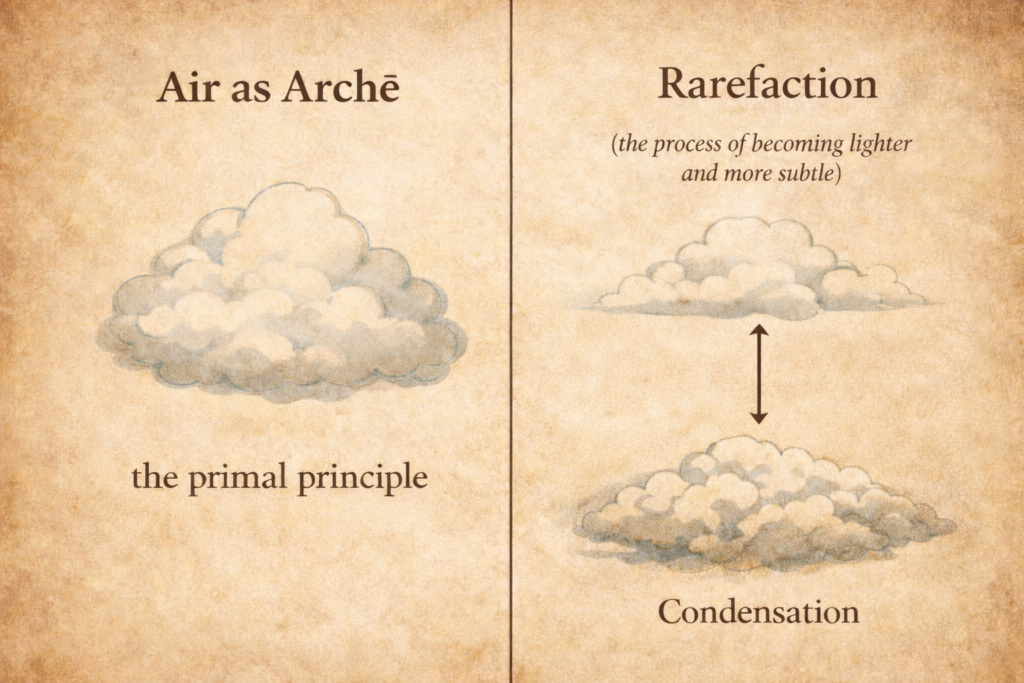
For the Light and Sound Meditator, this becomes an inner guide; tension condenses perception into noise and effort; ease rarefies attention into clarity, vibration, and spaciousness potentially increasing receptivity to the Light and Sound.
The Cosmology of Anaximenes Applied to Meditation
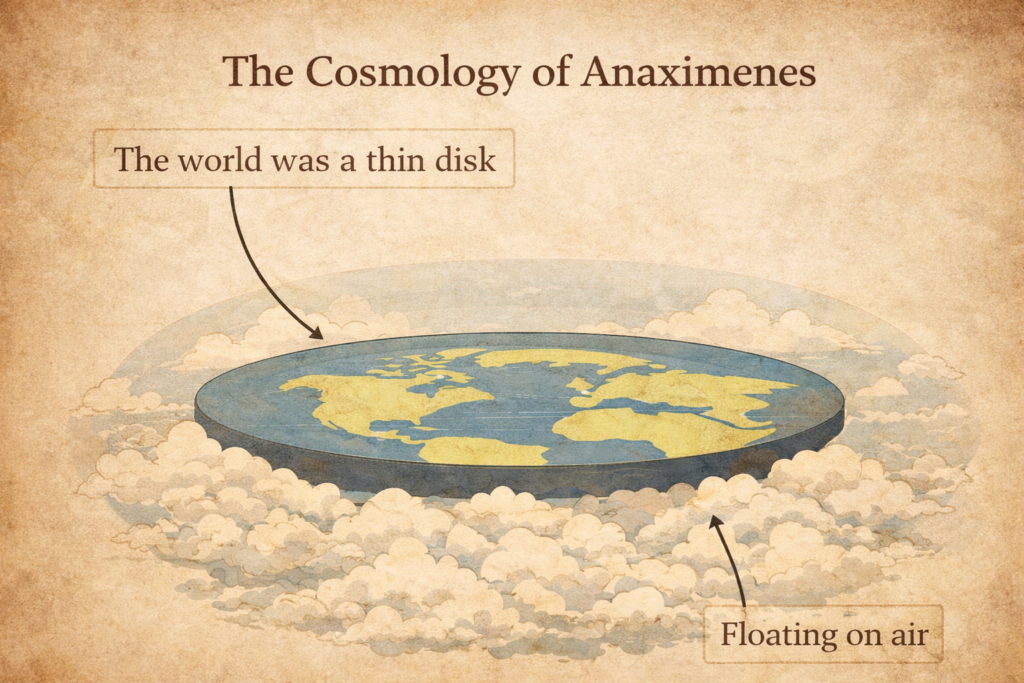
Air as ‘Breath’ and the Unifying Medium of Attention
Anaximenes links air with the breath and (in later reports) with what “holds” a person together, stating it was fundamental to life.
For a meditator, this parallels how breath can function as a focus of attention. The breath is the most immediate “field” you can reliably feel.
Practical Application:
- Let breath be the “base layer,” and allow inner Light/Sound to be “foreground events” arising within that base.
-
When attention on the Light and Sound is unstable, returning to breath helps re-establish concentration.
-
In Light and Sound meditation, breath can be the stabilizer that prevents chasing inner phenomena.
Rarefaction and Condensation of Air as a Model of ‘Subtle vs Heavy’ Meditation Experiences
Anaximenes explains how air is part of a series of changes in nature.The heavenly or celestial bodies were formed by fire rising out of the air, and earth formed by the condensing of air, so we see an increasing density as we descend into matter.
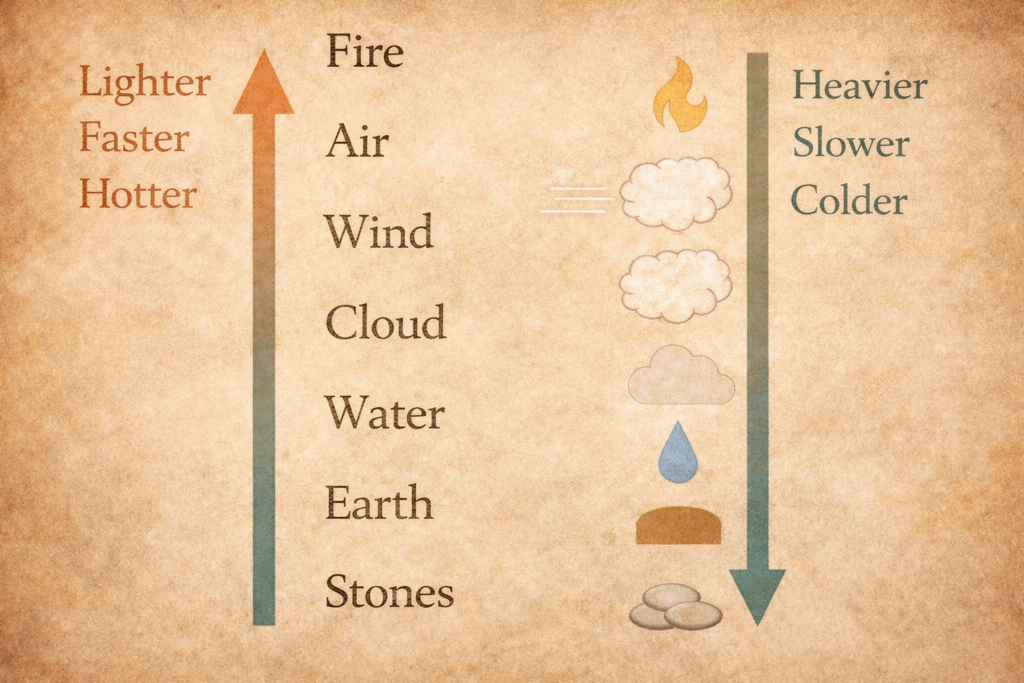
His mechanism—air becoming different things by becoming thinner (rarefied) or denser (condensed)—is a strong metaphor for how the meditative experience can shift along a spectrum:
-
When the mind is agitated, experience feels dense: Thoughts and emotions can be experienced as ‘heavy.’
-
When attention steadies and relaxes, experience can feel subtler: There may be a feeling of spaciousness, clarity, and perhaps a greater expansion with the Inner Light and Sound.
Practical Application:
- During practice, try to be aware how any tightening/straining (condensing), or softening/relaxing (rarefying) effect your concentration.
- The ‘lighter’ our thoughts and feelings are in meditation, the more potential we have to transcend these bodily limitations.
A Disciplined & Naturalistic Stance Toward Inner Phenomena
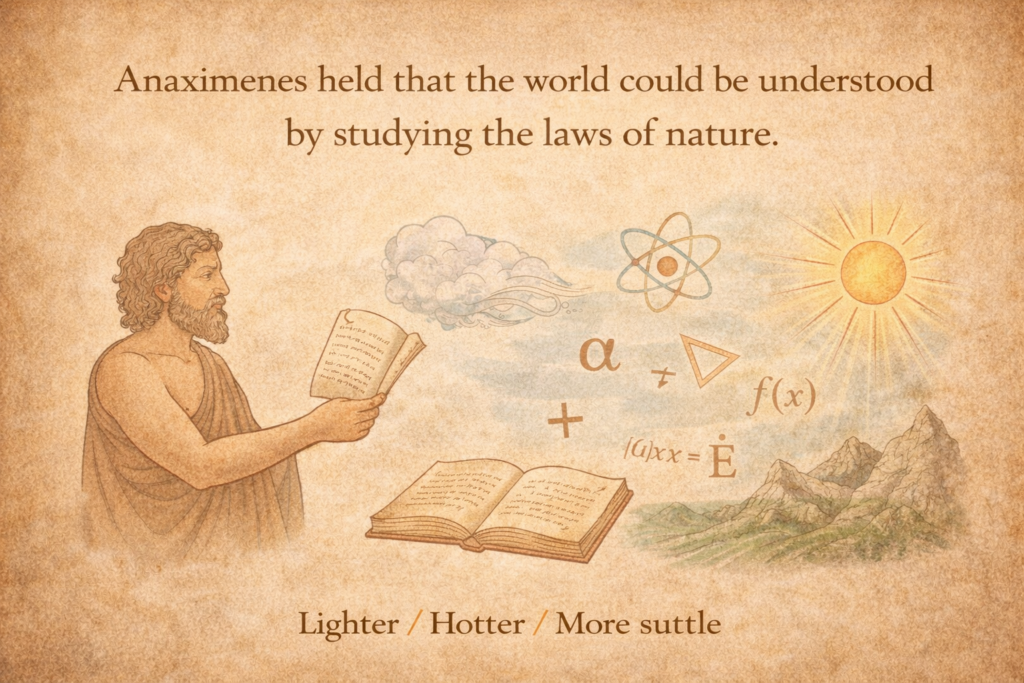
Anaximenes is important because he tries to explain the world using natural phenomena obeying laws rather than through myths.
Practical Application:
Keep a short meditation diary enabling you to make connections between quality of breath meditation and your connection with the Light and Sound. For example
breath settles (or tightens) → attention stabilises (or scatters) → inner light/sound clarifies (or dims) → after-effects (calm, inflation, irritability, clarity)
During meditation, consider:
Treat Inner Light/Sound as lawful phenomena in consciousness: A more consistent connection is likely to be made with relaxation, steadiness, devotion, posture and breath.
- Replace ‘special experiences mean I’m advanced’ with careful observation: What precedes them, what destabilizes them, what integrates these experiences. This all helps us to make concrete realisations from the meditation.
-
Let phenomena arise; keep the method consistent.
Recommended Resources
