Introduction to Alice Ann Bailey
Alice Ann Bailey (1880–1949) was one of the most influential esoteric writers of the twentieth century. Her extensive writings explored the nature of consciousness, spiritual evolution, meditation, initiation, and humanity’s relationship with the greater spiritual order.
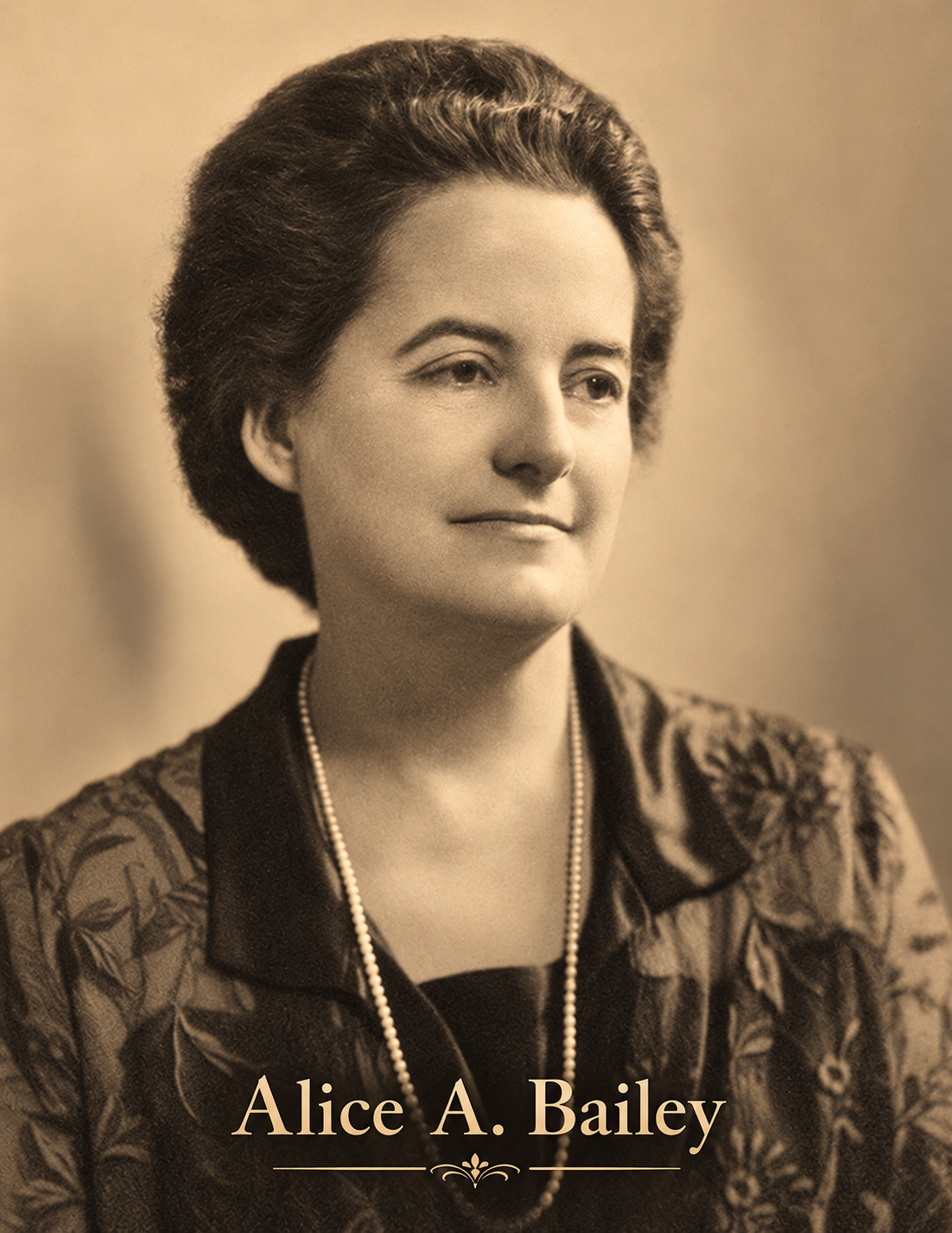
Drawing upon the Theosophical tradition while developing her own distinctive teachings, Bailey sought to present what she called the Ageless Wisdom: a body of spiritual knowledge concerned with the evolution of consciousness and the realisation of humanity’s divine potential.
Her work remains particularly significant for those interested in the relationship between the soul, the personality, and the higher states of awareness associated with spiritual initiation.
Early Life and Spiritual Beginnings
Alice Bailey was born Alice Ann La Trobe-Bateman on 16 June 1880 in Manchester, England, into a prosperous and deeply religious family.
Both parents died during her childhood, and she was subsequently raised within a strict Christian environment. Her early spiritual interests were shaped by conventional Christian teachings, and as a young woman she undertook evangelical work among British soldiers in Ireland and India.
During this period, Bailey developed a strong commitment to religious service, although her understanding of spirituality would undergo considerable transformation.
Her first marriage to Walter Evans, an Anglican clergyman who later served in the Episcopal Church, proved deeply troubled. According to Bailey’s own account, she endured domestic violence, serious financial hardship, and considerable emotional distress. Following their separation in 1915, she was left to support their three young daughters, eventually finding employment in a sardine-canning factory in California.
These painful experiences contributed to a profound questioning of her orthodox Christian beliefs and marked a turning point in her spiritual development.
Alice Ann Bailey & Esoteric Philosophy
Bailey’s spiritual direction changed significantly when she encountered the teachings of the Theosophical Society and the writings of Helena Petrovna Blavatsky.
Theosophy introduced her to ideas concerning reincarnation, karma, the spiritual hierarchy, subtle planes of existence, and the progressive evolution of human consciousness.
These concepts provided a broader framework through which she began to reinterpret her earlier Christian beliefs.
In 1919, Bailey reported establishing telepathic contact with a spiritual teacher whom she identified as the Tibetan Master Djwhal Khul, commonly referred to as D.K.
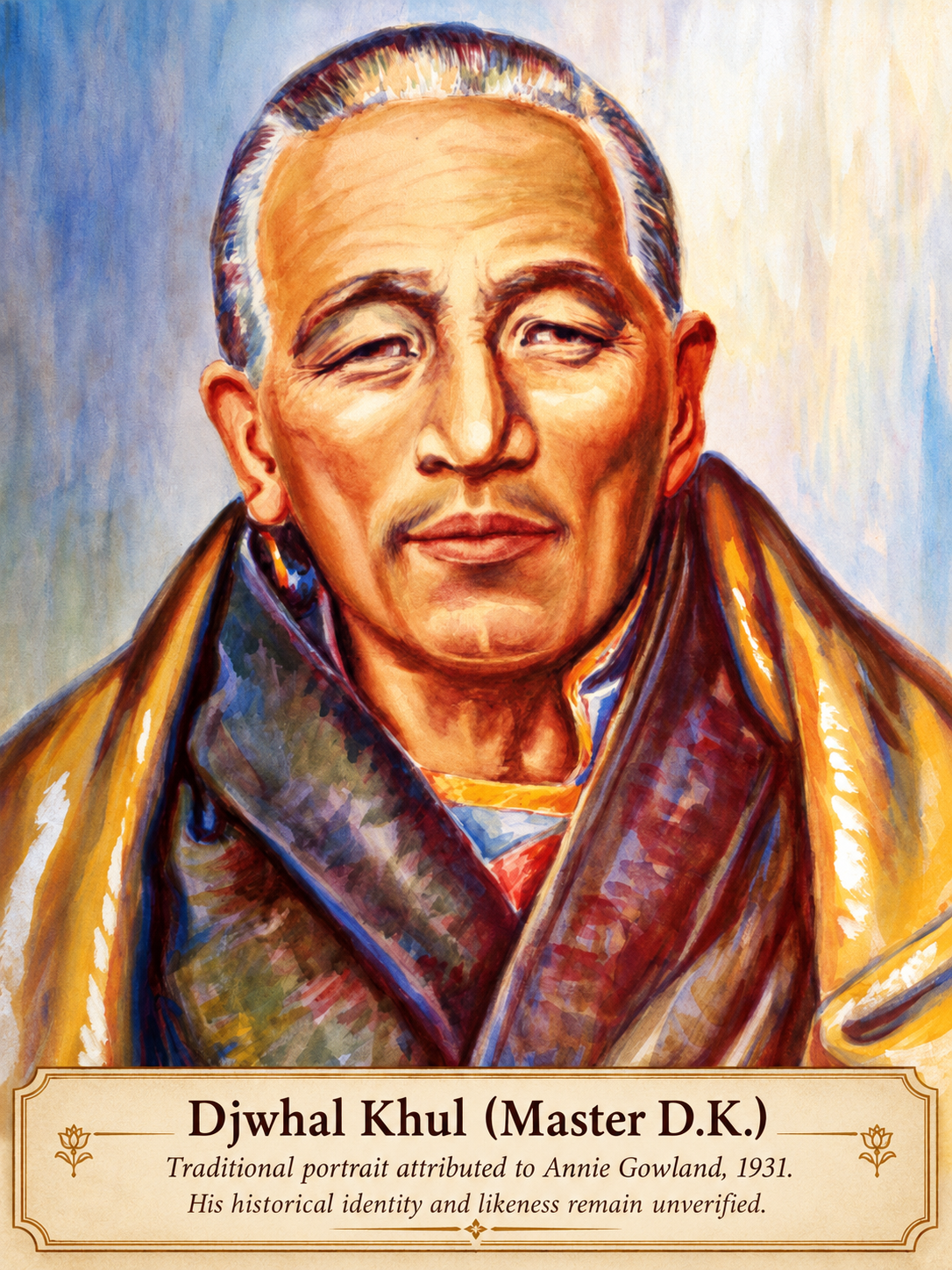
She maintained that this teacher communicated an extensive body of esoteric knowledge through her over the following thirty years.
According to Bailey’s account, this process involved the reception of spiritual teachings which were subsequently expressed through her own mental faculties, using language, diagrams, correspondences, and elaborate philosophical structures.
The relationship between higher spiritual apprehension, telepathic reception, and intellectual formulation is especially interesting. It raises the possibility that complex esoteric teachings might represent an attempt to translate intuitive or purportedly transmitted knowledge into forms accessible to the human intellect.
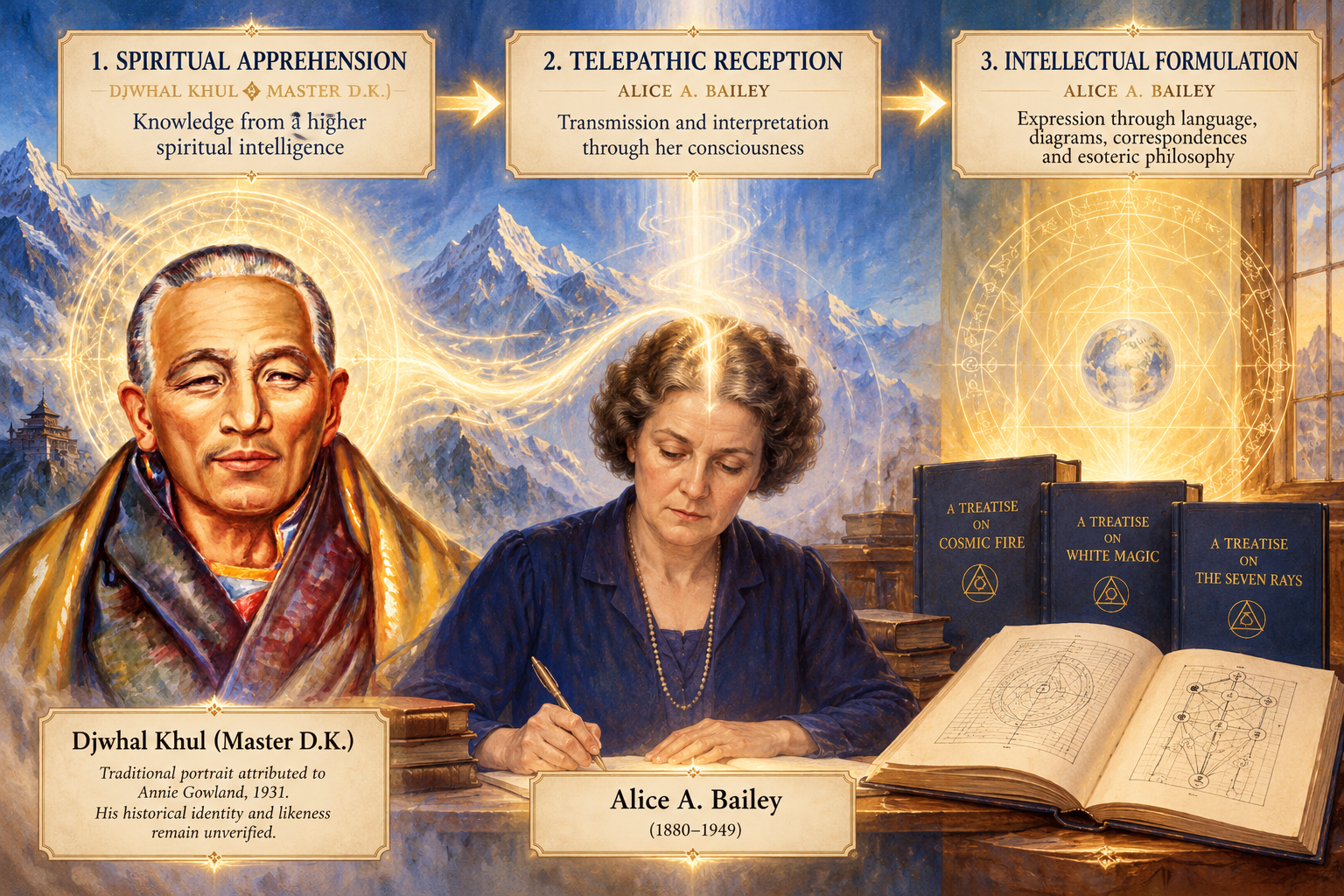
Although the claimed source of these communications remains a matter of spiritual belief rather than independently established fact, the resulting writings became the foundation of Bailey’s esoteric philosophy.
The Development of Her Work
Together with her second husband, Foster Bailey, she established organisations dedicated to spiritual education, meditation, and service.
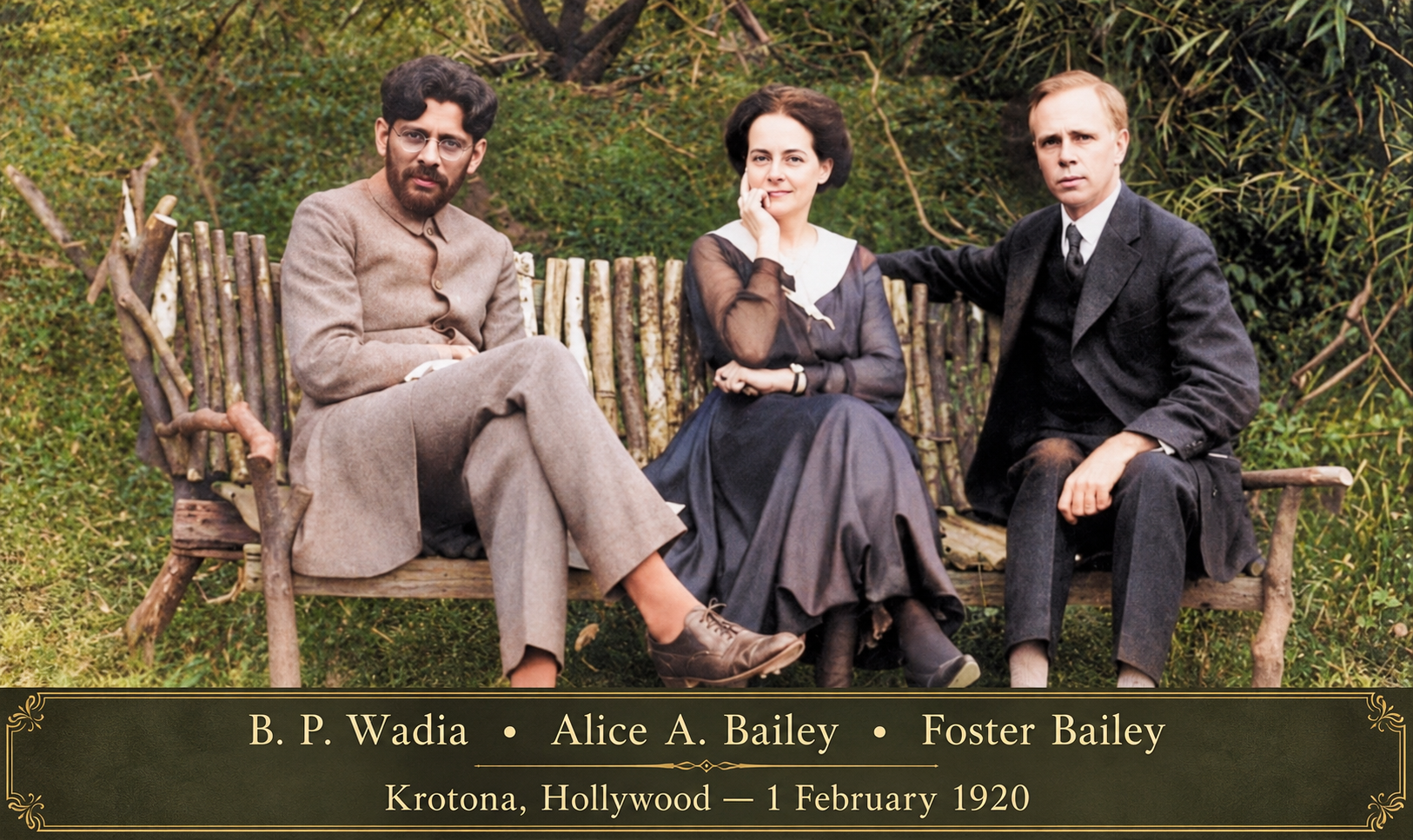
The Lucis Trust was founded in 1922, followed by the Arcane School in 1923. The latter offered systematic training in meditation, esoteric study, and the practical responsibilities of discipleship.

Further initiatives included World Goodwill, established in 1932, and Triangles, introduced in 1937, both intended to encourage goodwill, cooperation, and spiritual responsibility within humanity.
Central to these activities was Bailey’s conviction that genuine spiritual development should not remain confined to private mystical experience but should find expression through constructive service.
Alice Ann Bailey Principal Writings
Bailey’s literary output was considerable, comprising twenty-four books, including nineteen that she attributed to her collaboration with Djwhal Khul.
Among her most important works are:
- Initiation, Human and Solar (1922): Explores the spiritual hierarchy, the Masters of Wisdom, and the stages of initiation through which consciousness is said to evolve.
- A Treatise on Cosmic Fire (1925): Presents an extensive metaphysical account of cosmic evolution, spiritual energies, and the relationship between consciousness and manifestation.
- The Light of the Soul (1927): Offers Bailey’s interpretation of Patanjali’s Yoga Sutras, examining meditation, mental discipline, and the liberation of consciousness.
- A Treatise on White Magic (1934): Introduces the Fifteen Rules for Magic, describing the alignment of the personality with the soul and the responsible direction of spiritual energy.
- A Treatise on the Seven Rays (1936–1960): A five-volume exploration of seven fundamental spiritual energies and their influence upon psychology, consciousness, and evolution.
- Discipleship in the New Age (1944–1955): Examines spiritual training, group discipleship, and the practical demands of the initiatory path.
The Central Message of Bailey’s Teachings
Underlying the complexity of Bailey’s writings is a relatively simple proposition: human consciousness ordinarily operates through identification with the physical, emotional, and mental aspects of the personality.
Spiritual development involves gradually transferring that identification towards the soul, allowing a deeper intelligence, love, and spiritual purpose to become operative.
Meditation, discrimination, self-observation, and service are presented as essential instruments of this transformation.
An important element of her philosophy is the distinction between intellectual knowledge and spiritual intuition.
In Bailey’s terminology, Buddhi represents a higher faculty of direct spiritual apprehension, transcending the analytical activity of the ordinary mind.
From this perspective, spiritual understanding is not achieved through accumulating concepts alone, but through a transformation in the very nature of awareness.
Bailey and the Path of Light and Sound
Although Alice Bailey did not specifically teach the Initiatory practices associated with contemporary Light and Sound meditation, meaningful parallels can be drawn between her esoteric philosophy and the inward journey towards spiritual realisation.
Both approaches recognise that the ordinary thinking mind cannot, by itself, provide the final apprehension of spiritual reality. Intellectual understanding may prepare the seeker, but direct spiritual experience is regarded as essential to the deeper transformation of consciousness.
Where Bailey emphasises the gradual alignment of the personality with the soul, the Path of Light and Sound directs attention towards the possibility of consciousness awakening beyond its habitual identification with thought, emotion, and physical form.
Within the Light and Sound tradition, Initiation is understood as an opening to the inner spiritual Light and Sound, providing a means through which the meditator may explore increasingly subtle dimensions of awareness. The ultimate objective is Enlightenment, understood as the transcendence of the separate self and the recognition of a deeper, unified reality.
The opportunity to explore these teachings through Initiation continues today. The Light and Sound Meditation website currently describes free monthly Global Initiations, offering guidance and preparation for those wishing to explore the inner Light and Sound.
Bailey’s teachings may be understood as describing important conditions of preparation, purification, and inner alignment, while the Path of Light and Sound places particular emphasis upon the direct experience of consciousness beyond the limitations of the conceptual mind.
The distinction is subtle but significant. The intellect may describe the structure of spiritual reality, while direct spiritual awareness seeks to apprehend that reality without the intermediary of thought.
In this sense, Bailey’s esoteric philosophy and the Path of Light and Sound offer complementary perspectives: one providing a conceptual map of spiritual evolution, the other emphasising its exploration through direct meditative experience.
Her Lasting Legacy
Alice Bailey died on 15 December 1949, leaving an extensive body of writings that continues to influence students of esotericism, meditation, and spiritual philosophy.
Her work invites readers to examine the relationship between the human personality and higher consciousness, while considering how spiritual insight might be expressed through everyday life.
Among her most accessible contributions to this enquiry are the Fifteen Rules for Magic, presented in A Treatise on White Magic.
These Rules will form the subject of our forthcoming series, in which we will explore their meaning and consider their deeper relevance to the Path of Light and Sound.
