Emily Dickinson: Exploring Mysticism Through Poetry

Introduction
Emily Dickinson was born in Amherst Massachusetts, on Dec 10th 1930 and lived in her father’s house throughout her life. Her poems were largely unpublished until after her death on May 15, 1886.
It is her tragic vision which draws me personally to her work, for she knew that she could not pierce the veil obscuring the meaning of life beyond birth and death and yet she was brave enough to ask the questions through her poetry.
This short article explores where her poetry and mysticism combine and hints at answering her questions about the meaning of life years after her death, nearly 140 years ago.
Emily Dickinson never founded a religion or led a meditation group, yet her short, strange poems open a doorway into silence – a silence alive with God (as T.S. Eliot would say), with doubt, grief, and yet with a fragile, persistent hope. In this post, I want to walk a little of that inner path with her, and explore how her words can help us listen more deeply to our own hearts and explore where meditation can help bridge the gap between living life and finding the meaning of Life itself.
Key Facts about the Life of Emily Dickinson
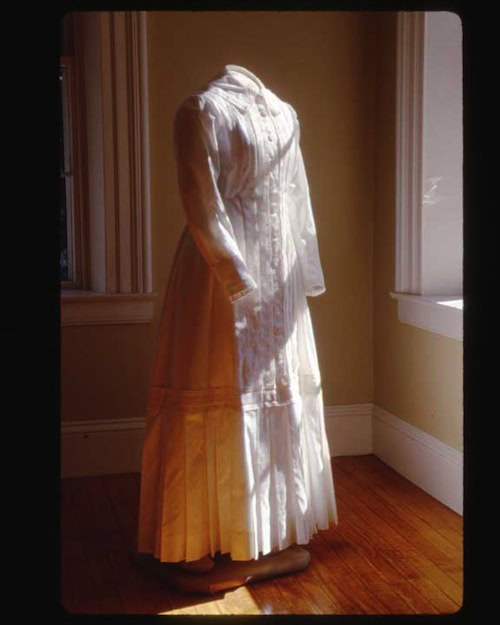
Here are 10 key facts about Emily Dickinson:



Emotional Depth
-
She compresses eternity into something very intimate: this single moment.
-
There’s a kind of tenderness here: rather than grand cosmic time, we have a succession of fragile, human “nows” that we actually live inside.
-
Emotionally, this line acknowledges both impermanence and sacredness: every now is passing, and precisely because of that, it’s precious.
Meditation Connection
-
This is almost a meditation instruction in one line.
-
We never actually experience “forever”; we only ever taste this moment.
-
To touch the timeless, we don’t travel somewhere else—we deepen into the now.
-
Enlightenment and “being in the Now” point to the same shift. Ordinary “now” usually means the current moment or our immediate thoughts and sensations. Deeper practice reveals a Timeless Now: in which all experience appears.
Enlightenment is recognising that this presence is what you truly are, rather than the changing story of “me” built from past and future. By returning again and again to the Now—seeing thoughts of time as appearances in awareness—the grip of ego softens, and qualities like peace, clarity, and love naturally shine through.
Enlightenment is achievable in this lifetime, see the links below for your reference.

She is saying that death is not just an ending, but a conversation between two aspects of us:
-
“Spirit” – what is living, conscious, aspiring to the eternal.
-
“Dust” – the body and the earthly, mortal part made from matter (“dust thou art, and unto dust shalt thou return”).
In the poem, Death is almost like a third presence that announces separation; the spirit claims its continuity, while the dust insists on its rights and reality. The result is a “dialogue” between what is passing and what cannot quite accept it.
So:
-
Death is not only physical; it is a negotiation of identity: Am I this body that will end, or this spirit that feels it cannot end?
From a meditative perspective, that “dialogue between the spirit and the dust” is happening long before physical death.
1. Every deep meditation is a rehearsal of that dialogue
In meditation:
-
“Dust” is everything tied to the body–mind: sensations, restlessness, roles, memories, fears, desires.
-
“Spirit” is the silent awareness that observes all of this, and in Light and Sound terms, is drawn upward by subtle inner Light and inner Sound.
When you sit, there is often a tug-of-war:
-
Dust says: “I am tired, hungry, bored, worried. This is what is real.”
-
Spirit answers: “There is something deeper, still, luminous, that I belong to.”
Each time you gently turn attention away from the dust and toward the inner current, you are siding with spirit in that dialogue.
2. “Dying before you die”
Many traditions speak of “dying before dying”:
-
Letting the identification with body, personality, and story soften and fall away while still alive.
-
On the Light and Sound path, this can be experienced as ascending in consciousness beyond the physical and mental planes, while the body remains sitting quite normally.
Dickinson’s line fits this beautifully:
Death is not just an event at the end, but a continuous inner process in which spirit gradually recognises itself as distinct from dust.
Meditation makes that process conscious and graceful, rather than abrupt and frightening.
3. Light and Sound as the language of “Spirit”
If death is a “dialogue,” then in inner practice:
-
The dust “speaks” through sensations, emotions, mental noise, and resistance.
-
The spirit “speaks” through:
-
Subtle peace and spaciousness,
-
Intuitions of love and meaning,
-
And on the Light and Sound path, the inner Radiance (Light) and Inner Sound current that draw attention upward and inward.
-
Learning to meditate is learning which voice to trust:
-
Not by suppressing the dust, but by patiently listening through it, until the finer tone of spirit is clearly heard and followed.
So, in short:
-
Dickinson’s line captures the tension between mortality and immortality inside us.
-
Meditation is the art of participating consciously in that dialogue, again and again, until the spirit’s view becomes our natural home, and the “dust” can be honoured, cared for, and eventually laid down without fear.

1. What is Dickinson saying?
a) “Unable are the loved to die”
She is not denying physical death. Bodies die, relationships end, people disappear from the senses.
She is saying:
-
Those who are truly loved do not vanish in the way the mind fears.
-
Love keeps them present – in consciousness, in being.
-
Their form is gone, but their reality is not “finished.”
In other words: death can remove the person from our sight, but love refuses to agree that they are simply nothing.
b) “For love is Immortality”
This is the key line.
She is saying that:
-
Love itself has a timeless quality; it doesn’t belong to the clock.
-
When we truly love, we are touching something that is beyond time, beyond coming and going.
-
Therefore, anyone held in that love participates in that timelessness – they “cannot die” in the deepest sense.
So the logic is:
-
Love is immortal.
-
Those we truly love are held in that immortal love.
-
Therefore, they cannot really die, even if their body passes.
This isn’t sentimental; it is a metaphysical statement: Love is of the same order as the soul – not the body.
2. Relation to Meditation
On a Light and Sound path, it can be said that
-
The soul is of the same “substance” as the inner Light and inner Sound.
-
At its deepest level, the soul is not born and does not die; the body and personality are temporary vehicles.
Dickinson’s line aligns with this in several ways:
a) Love as the signature of the soul
In meditation, especially when the inner current draws us upward:
-
The mind quietens,
-
The body is forgotten for a time,
-
Yet there is a felt warmth, tenderness, unity, or devotion that often appears quite naturally.
This deeper love is not emotional clinginess; it is a radiance of the soul.
You could say:
-
Inner Light is how the soul sees.
-
Inner Sound is how the soul hears.
-
Love is how the soul is.
So when Dickinson says “love is Immortality,” a mystic could hear:
The very essence of the soul – love – is immortal, and anything truly touched by it is held in that immortality.
b) Those we “love in the Light” cannot die
As practice matures:
-
We begin to sense other beings not just as bodies and histories, but as conscious presences in the same inner field.
-
In deeper states, there can be a direct intuition that all souls are moving in one great current of Light and Sound.
From that perspective:
-
When a loved one dies, the form goes, but the soul-current remains.
-
Love is the recognition of that shared current.
-
Therefore the loved one is not truly lost – they continue in the same great Ocean you are touching in meditation.
Dickinson’s line then becomes almost like a Light and Sound teaching:
If you know someone in true love (soul-level recognition), then you know them in that which does not die – the Light, the Sound, the Eternal. Therefore, they are “unable to die.”
c) Grief, meditation, and this line
For a meditator dealing with loss, this verse can be very practical:
-
The heart feels the pain of separation: “the dust has gone.”
-
In meditation, you allow that pain, but you also rest in the inner Presence where love itself is felt as a quiet, enduring reality.
-
From there, you may sense:
-
The beloved is not in your memories only,
-
But lives in the same depth of being that the inner Light and Sound reveal.
-
So the practice is:
-
Let the human grief be honest.
-
Turn attention to the inner current (Light, Sound, or deep silence).
-
Recognise that the love you feel is coming from that depth, not just from the personality.
-
Let Dickinson’s line be a pointer:
“Unable are the loved to die, for love is Immortality.”
It becomes almost a mantra of trust: The loved are held where love is – and love itself is undying.
Meditation Links:
Emily Dickinson Links:
Emily Dickinson: David Sylvian, (Mannafon, 2009)